How to dry and store a reusable cup between coffee stops
· Editorial team newswithtomseattle.com
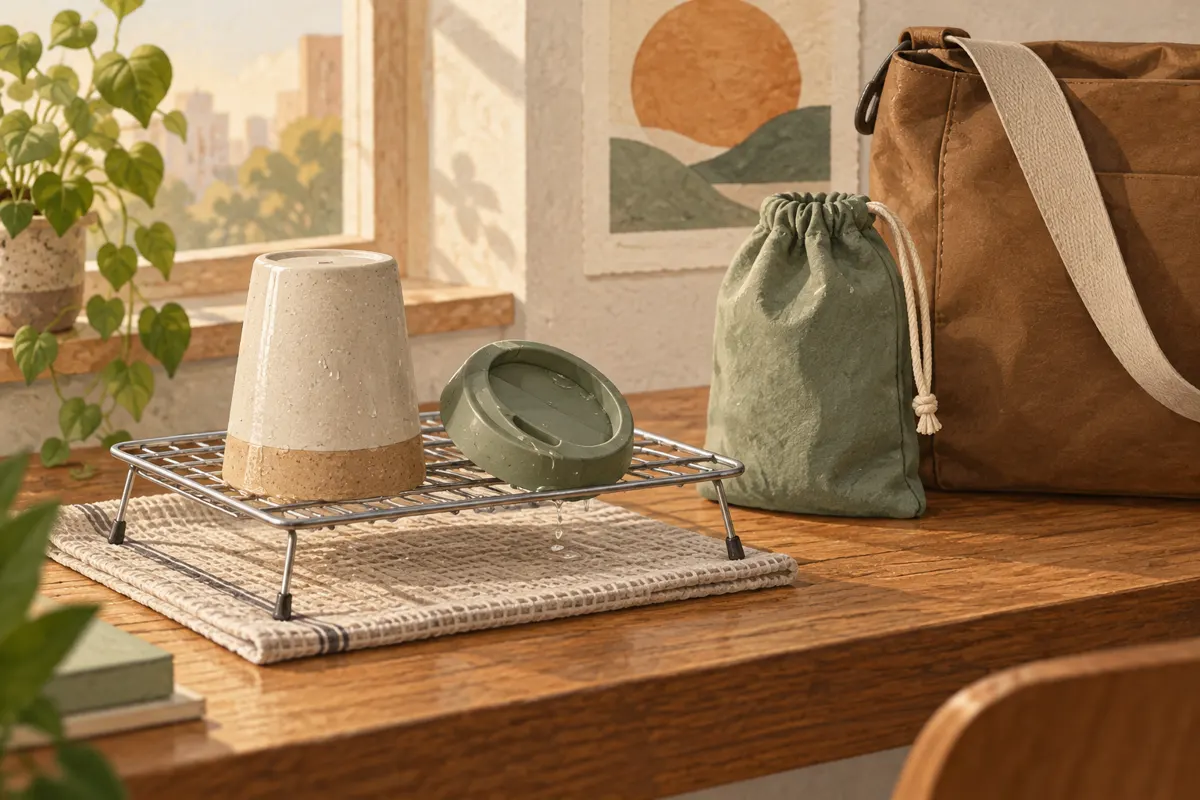
Empty your reusable cup, rinse it when a sink is available, and drain both the cup and lid before packing them. If you cannot dry everything immediately, keep the cup upright and separate from your belongings, then wash and air-dry it at your next opportunity. Our proposed commuter routine below makes room for both situations: a quick sink stop and a trip with nowhere to rinse.
Empty the cup before you pack it
The first useful step is removing leftover liquid. A cup that looks finished can still contain a small puddle, while its lid may hold drops around the drinking opening. Pause somewhere stable before opening it, rather than trying to empty or dismantle it while walking or boarding transit.
- Finish the drink or empty the remainder into a suitable sink or designated liquid-disposal point.
- Remove the lid and tip out liquid trapped inside it.
- Check the rim and outside of the cup for drips.
- Keep the cup upright until you can rinse or pack it securely.
Avoid pouring leftover coffee into a trash bin unless it is specifically intended for liquids. If there is nowhere suitable to empty the cup, keep the remaining drink contained and carry it upright until you reach one.
Use a sink stop to rinse and drain
Wash the cup as soon as practical after use. The Little Black Coffee Cup recommends rinsing at the earliest opportunity when dish soap is unavailable; Pirani also advises thorough cleaning after each use. Treat a daytime rinse as an interim step, with a proper wash still to come.
- Rinse the cup interior and the underside of the lid with clean water.
- Open any drinking closure so you can rinse the accessible opening.
- Drain the cup and lid separately over the sink.
- Wipe the exterior dry with a clean cloth before putting it near other belongings.
Follow your cup’s care instructions for removable seals, sleeves and lid parts. If you have only a brief stop, leave detailed disassembly for somewhere you can keep track of the pieces. Do not assume every reusable cup is dishwasher-safe because one brand’s model is.
Contain drips when there is no sink
Without a sink, focus on containing residue until you can clean the cup. Our proposal is to give the used cup its own carrying space: an upright bottle pocket, a washable pouch, or a separate compartment away from electronics, books and loose papers.
- Close the lid and drinking opening according to the cup’s instructions.
- Keep a cup with a sip opening upright; do not assume its lid makes it leakproof.
- Use a washable, water-resistant pouch as secondary drip containment, checking how its closure works.
- If you use a cloth to catch small drips, keep it separate from the clean cloth used for drying.
Containment is temporary storage, not cleaning or drying. Once you reach a sink, take the cup out of its pouch and deal with both. A wet pouch needs attention too.
Let the cup and lid dry separately
Our proposed drying setup is simple: after washing, place the cup and lid separately on a clean drying rack, positioned so water can drain and air can reach their surfaces. Keep the drinking closure open where the design allows. Check lid recesses and removable seals before reassembling.
If you need to leave before the parts are dry, drain them thoroughly and use your separate carrying space. Reopen and finish drying them at your destination. Avoid leaving an open cup loose in your bag, where the rim can touch other objects.
Reset the cup for your next coffee
At home or work, wash the cup and lid following the manufacturer’s instructions, let all parts dry, and clean any pouch or cloth that caught coffee. Store the dry cup somewhere you will remember it. Both supplied habit guides emphasize keeping the cup accessible or using a reminder.
Before the next order, check that the interior, rim and lid are clean. Tell the barista you have a reusable cup, know its capacity, and remove the lid before handing it over. If it still has residue from the previous drink, wash it before presenting it for another coffee.